
PHOENIX-OoC Research Presented at the 4th X-CHEM Workshop in Italy
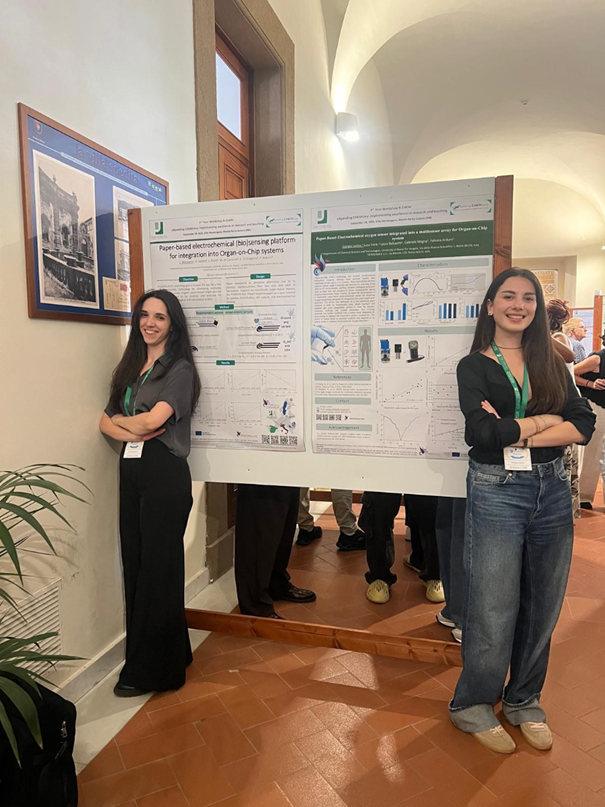
On 18 September 2026, PHOENIX-OoC researchers Laura Belcastro and Giorgia Leotta from the University of Rome Tor Vergata participated in the 4th X-CHEM Workshop, held at Villa Mondragone in Monte Porzio Catone, Italy, presenting their latest research on paper-based electrochemical sensing technologies for Organ-on-Chip applications.
Organised by the Department of Chemical Science and Technologies of the University of Rome Tor Vergata, the workshop brought together more than 100 participants, including researchers, faculty members, and PhD students. The event provided a platform for sharing scientific achievements, encouraging interdisciplinary discussions, and exploring new research perspectives in healthcare, environmental sustainability, advanced materials, and innovative analytical technologies.
Laura Belcastro presented a poster entitled “Paper-Based (Bio)Sensing Platform for Integration into Organ-on-Chip Systems”, highlighting the development of a screen-printed electrochemical (bio)sensor array designed for integration into the project’s origami-inspired paper-based Organ-on-Chip platform. Her presentation showcased preliminary results on the detection of multiple biomarkers, including pH, nitrate, glucose, lactate, lactate dehydrogenase (LDH), oxygen, and nitric oxide. Particular attention was given to the electrode functionalisation strategies developed to enable continuous, real-time, and multiplexed biomarker monitoring.
Giorgia Leotta presented her research through a poster entitled “Paper-Based Electrochemical Oxygen Sensor Integrated into a Multisensor Array for Organ-on-Chip System”. Her work focused on developing a paper-based electrochemical sensor for dissolved oxygen monitoring, employing screen-printed electrodes and carbon black functionalisation. Preliminary experimental results demonstrated promising sensor performance in terms of signal stability, reproducibility, and continuous oxygen detection, supporting its potential integration into the PHOENIX-OoC multisensor platform.
Both contributions highlighted the progress being made within PHOENIX-OoC towards developing sustainable, low-cost, and advanced sensing solutions for next-generation Organ-on-Chip technologies.
Participation in the workshop also provided an opportunity to exchange knowledge, receive feedback from fellow researchers, and strengthen scientific collaboration across different research areas.


